
This post is intended to explain what you typically want to check for during an OpenID Connect assessment and also provide you with a guide to setup your own OpenID Connect test environment.
Compass Security Blog
Offensive Defense
Page 5 of 7
Recently our analysts have been spending increasing amounts of time on IoT security. More specifically looking at the Tensilica Xtensa microcontroller architecture, and even more specifically at the Mongoose OS embedded operating system. With some public (CVE-2017-7185), and some not yet disclosed advisories (watch this space for Dobin Rutishauser’s work), we are happy to announce that […]
JSON Web Token, or more commonly known as JWT, is an open standard [1] that defines a compact and self-contained structure for securely transmitting information between multiple parties. The contained information can be verified and trusted through digital signatures. JWTs can be integrity protected using a secret using the HMAC algorithm or a public / private […]
SharePoint is a very popular browser-based collaboration and content management platform. Due to its high complexity, proprietary technology and confusing terminology it is often perceived as a black-box that IT and security professionals do not feel very comfortable with. These days, web security topics are well understood by many security professionals, penetration testers and vendors. But what […]
Opening up an internal SharePoint farm to the Internet in order to share resources with external parties might seem a good idea, because it helps avoiding expensive infrastructure changes. However, in terms of security, this is not recommended because it does not sufficiently protect internal resources from external threats. The protection of internal resources hinges […]
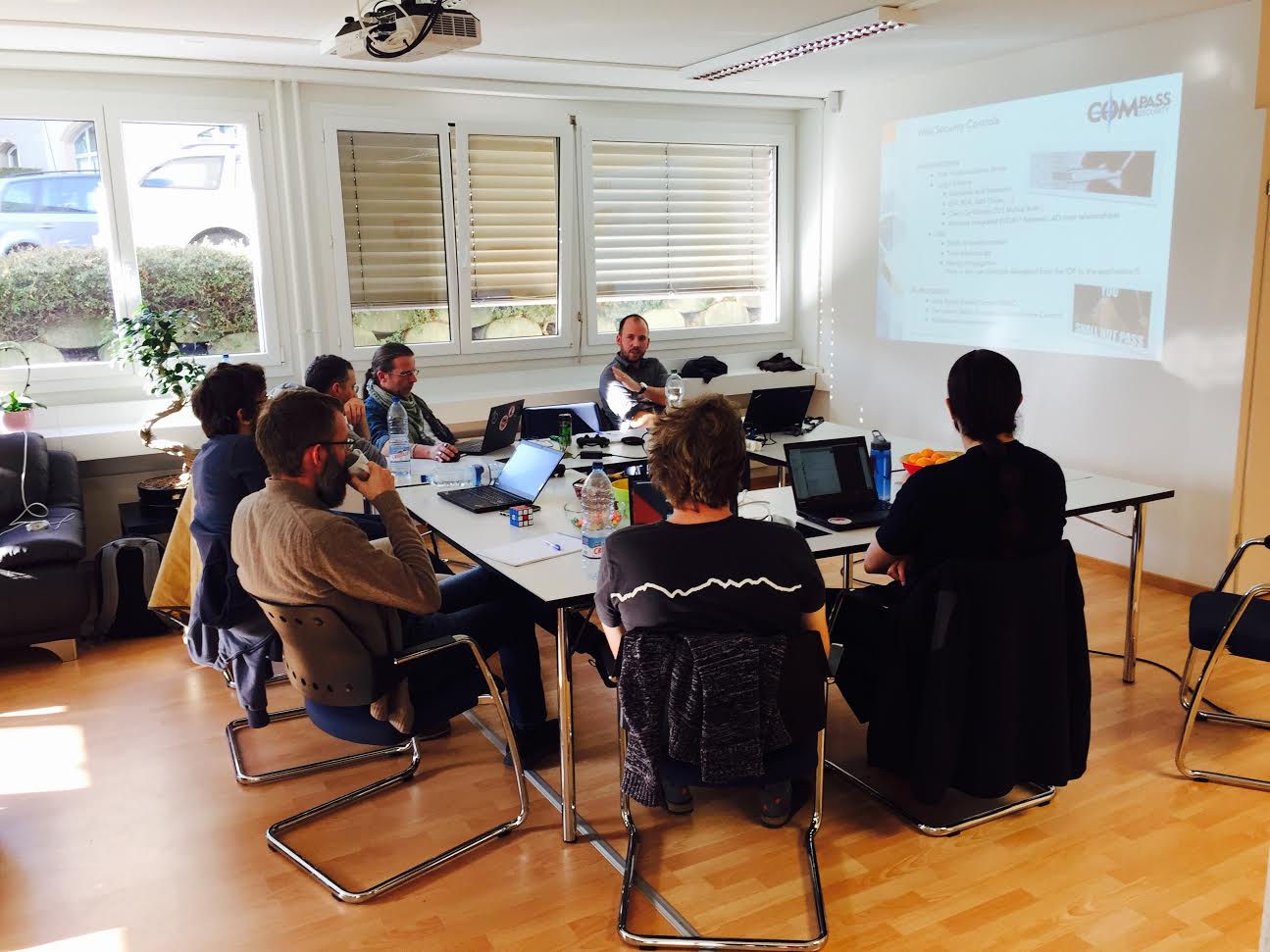
What is a Hack-Lab? Compass Security provides a monthly playful occasion for the security analysts to get-together and try to hack new devices, dive into current technologies and share their skills with their fellows. This also includes the improvement of internal tools, the research of newly identified publicly known attacks, and security analysis of hardware […]
What is a Hack-Lab? Compass Security provides a monthly playful occasion for the security analysts to get-together and try to hack new devices, dive into current technologies and share their skills with their fellows. This also includes the improvement of internal tools, the research of newly identified publicly known attacks, and security analysis of hardware […]
IoT devices in the news have been proliferating at an ever-increasing rate. Both hardware manufacturers and news agencies are trying to capture the attention of the general public with the next killer device and/or application combinations. More recent IoT news items included analysis on the Mirai botnet [0] and its effect on the internet as a whole, […]
Dieser Blog Post dient als Hintergrundartikel zum SRF Thementag «Blackout»: Wenn die Schweiz plötzlich keinen Strom mehr hätte vom Montag, 2. Januar 2017, 13.00 bis 22.00 Uhr (SRF News, SRF Kultur Wissen Beitrag) Wie ist die Vorgehensweisen von Hackern, die unerlaubten Zugriff auf fremde Systeme erlangen wollen? — beispielsweise im Netzwerk eines Energieversorgungsunternehmens. Basierend auf diesen […]
About a year ago, the Burp extension SAML Raider [0] was released as a result of a bachelor thesis [1] in collaboration with Compass Security. This Burp extension automates most of the steps, which are necessary to test a SAML single sign-on process and perform according attacks. With SAML Raider, an authentication bypass vulnerability in a Service […]
© 2026 Compass Security Blog