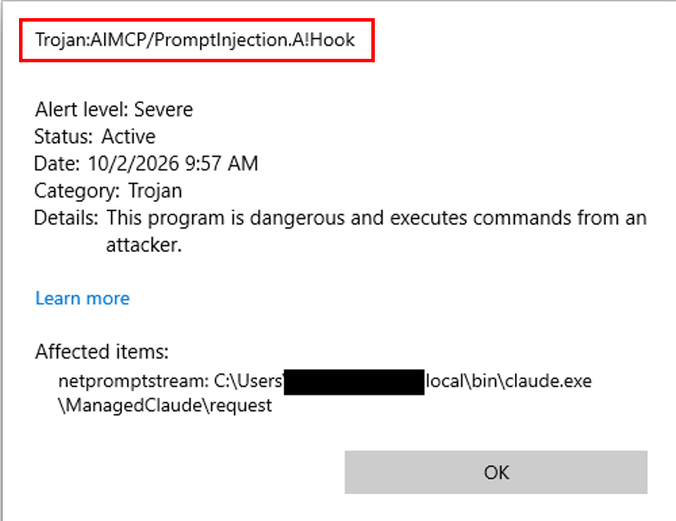
With AI agents now running in many Microsoft 365 tenants, monitoring their activity has become part of the security team’s job. Microsoft Defender XDR monitors AI agents through its integration with Microsoft Agent 365, the control plane for agents in your tenant. This post covers what to enable, where the data lands, and how to respond when an agent goes wrong. We will also show you some interesting log sources, where useful information about the behavior of agents can be found..
Compass Security Blog
Offensive Defense

Nowadays more and more security tools are used to monitor and generate alerts from different sources (EDR, Proxy, etc.).These alerts often contains URL, domain names, or file hashes that can and should be compared with a threat intelligence source to immediately identify current threats and avoid when possible false positives. In this article, we will […]

Intro into a Compass Splunk App, which can be used to perform a first triage and high level analysis of Volatility results coming from multiple hosts.

In this blog post we will reverse engineer a sample which acts as downloader for malware (aka a “dropper”). It is not uncommon to find such a downloader during DFIR engagements so we decided to take a look at it. The sample that we are going to analyze has been obtained from abuse.ch and was […]

A new vulnerability (CVE-2020-0796) affecting SMBv3 has been discovered. The community has started to name this vulnerability SMBGhost because everyone knows this vulnerability is present but no additional details are available. Microsoft also released the advisory ADV200005. [1]
Introduction The Content Security Policy (CSP) is a security mechanism web applications can use to reduce the risk of attacks based on XSS, code injection or clickjacking. Using different directives it is possible to lock down web applications by implementing a whitelist of trusted sources from which web resources like JavaScript may be loaded. Currently […]
© 2026 Compass Security Blog